Chapter 01 / Performance foundations
Find the character rhythm
A motion vocabulary makes a character recognizable. A production vocabulary makes that recognition repeatable across animators, reviews and playable states.
Begin with the player’s reading
Before choosing poses, write down what the player must understand. A cautious scout and an exhausted soldier might travel at the same speed, yet signal very different intentions. Their weight placement, gaze and recovery tell the difference.
Keep the description observable. “Confident” is useful as an ambition; “commits weight before turning the head” is useful as a review note. Connect each trait to something the team can pose, time and test.
Reference the cause, not just the shape
Film simple reference with the intended task in mind. Ask what the performer is lifting, avoiding or noticing. Record the whole body and the floor contact, then compare several attempts. An isolated attractive frame can hide the mechanics that made it believable.
Eadweard Muybridge’s motion studies are useful for observing phases, while Richard Williams’s The Animator’s Survival Kit offers a shared vocabulary for spacing and weight. Neither replaces reference for your particular character. Use sources to sharpen observation, not to prescribe a universal walk.
Reduce the performance to readable poses
Work at gameplay scale. A hand gesture that reads in a close camera may disappear behind armor or become indistinguishable from the background. Check the silhouette, line of action and relationship between head, chest and pelvis before adding secondary detail.
Pose the character from the actual camera angle and include the held prop. A two-handed weapon changes the silhouette and the available range of the shoulders. Strong staging reduces the temptation to compensate later with exaggerated effects or longer, less responsive timing.
Give weight a timing rule
Weight is not simply slowness. It emerges from acceleration, support and the effort required to redirect momentum. A large character can react quickly while needing a longer settle. A light character can hesitate emotionally without feeling physically heavy. Separate those ideas in the brief so the animation does not become a bundle of conflicting adjectives.
Choose a few timing relationships that the team can preserve. Perhaps the gaze leads a cautious turn, while the hips commit first during an urgent escape. Mark the major beats, then test how much anticipation is actually available before the player expects a response. Gameplay may require an immediate movement signal while upper-body anticipation finishes on another layer.

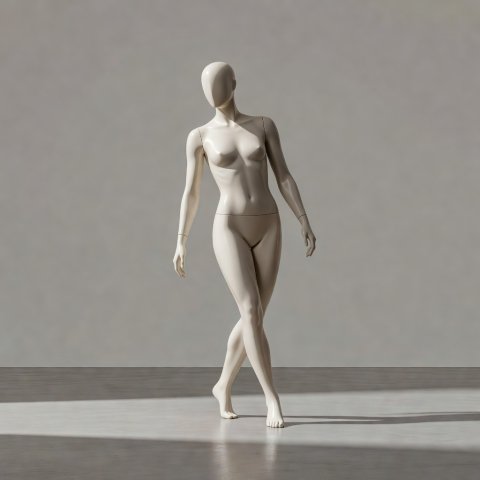
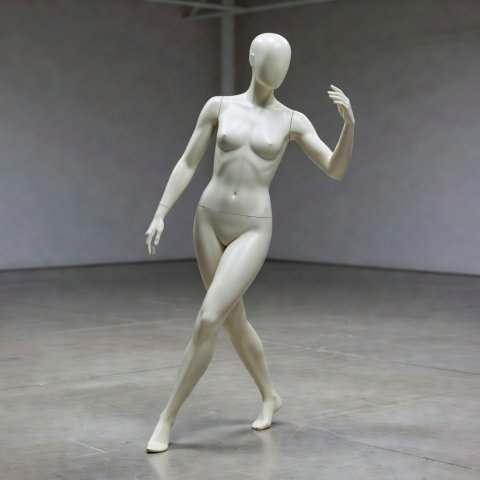
Choose capture or keyframes by the problem
Motion capture can preserve relationships in a performed action, particularly subtle changes of balance and interpersonal timing. It also introduces work: planning, calibration, solving, retargeting and cleanup. A captured take is source material, not an engine-ready result. Budget for the work needed to make contacts, loops and interruptions reliable.
Keyframing offers direct control over exaggeration, impossible anatomy and compact gameplay timing. Many pipelines combine both methods. Blender, Autodesk Maya and Autodesk MotionBuilder can participate in different parts of that process; the important decision is which data moves between them and who validates it. Agree on scale and skeleton expectations before recording a large session.
Review a small set before making a large one
Build an idle, a start, a locomotion loop and a stop before approving dozens of variations. Add one interruption that deliberately challenges the performance. If the character becomes unrecognizable when leaving a move early, the vocabulary may depend too heavily on complete playback.
Ask reviewers to separate intention, mechanics and integration. “The stop feels weak” might mean unclear emotion, missing deceleration, or a controller that continues sliding after the feet settle. Those are different fixes owned by different disciplines. A short recording with input visible helps the team identify the actual cause.
Performance approval checklist
- The intention reads at the intended camera distance.
- Support, contact and changes of weight are understandable.
- The character remains recognizable during interrupted playback.
- Reference rights and capture permissions are accounted for.
- The technical team has reviewed the most demanding poses.
Approval should mean the performance is ready to guide production, not that every future clip must imitate it exactly. Leave room for context, damage, equipment and emotional change. A vocabulary is most useful when it supports variation while keeping the character coherent.